
SGL Esthétique Geneva
Carbon Peel or TCA peel: how should you choose for your skin?
Carbon Peel and TCA peels use different techniques. Objectives, limitations, after-effects and questions to ask before a facial treatment in Geneva.
You would like to improve your complexion's radiance, but treatment names sound similar and the promises you find online contradict one another. A Carbon Peel, sometimes called a Hollywood Peel, and a TCA peel can both come into a discussion about skin quality. However, they do not use the same procedure and may not address the same concern.
The first question is not “which is more powerful?”. You need to clarify what bothers you: a dull complexion, visible pores, blemishes, a dark spot, uneven texture or a scar. Your skin, your current treatments and the recovery time you can accept also matter. A treatment that appears suitable for someone else is not automatically suitable for you.
What does Carbon Peel mean?
In medical publications, some “carbon peel” protocols combine a carbon suspension applied to the skin with an Nd:YAG laser. The exact methods, settings and devices differ between studies and practices. The commercial name Hollywood Peel alone does not fully describe the treatment you will be offered.
The practice presents the Hollywood Peel or Carbon Peel in Geneva as a laser treatment intended for radiance and the appearance of skin texture. Before a session, it is reasonable to ask which device and protocol will actually be used, what result is realistic for your objective and which precautions apply to your skin phototype. An advertising photograph answers none of these questions.
The word “peel” may suggest visible shedding of the skin. This is not a reliable description of every session called a Carbon Peel. Possible after-effects should be explained for your specific protocol, rather than inferred from the treatment's name.
What does a TCA peel mean?
TCA, or trichloroacetic acid, is used in certain chemical peels. The product produces controlled exfoliation; the intended depth depends, among other things, on its concentration and how it is applied. The medical review of superficial and medium-depth peels notes that deeper action can carry a greater risk of complications. It would therefore be misleading to describe “the TCA peel” as a single protocol.
The practice's page on medical peels discusses skin texture, certain dark spots and radiance. It also explains that the choice depends on skin phototype and sensitivity. The consultation should clarify any skin preparation, expected after-effects and sun-protection instructions. These factors can weigh as heavily in your decision as the result you hope to achieve.
A chemical peel does not replace a diagnosis. A pigmented spot, for example, can have several causes. Before choosing an acid or a concentration, the doctor needs to know what it is and whether another approach would be preferable.
Radiance, pores and blemishes: what do studies say?
The data on carbon-assisted laser protocols are interesting, but remain too limited to promise an individual result. A randomised split-face trial followed 22 people with acne. It observed an improvement on the treated side after three sessions, but the authors themselves emphasise the study's small size. These results neither guarantee the same effect on every skin type nor establish the Carbon Peel as the standard treatment for every form of acne.
Another study, involving 20 women and the appearance of pores, compared an Nd:YAG laser alone with a protocol that added a carbon step. It found no significant difference in results between the two sides, while more adverse effects were reported on the combined-treatment side. This is a useful point: adding carbon does not, by itself, prove that a treatment is better.
A small pilot study also reported improvements in several measures after treatment combining a Carbon Peel and botulinum toxin micro-injections. Because two interventions were combined, it would be incorrect to attribute these results to the Carbon Peel alone. The quality of the evidence and the protocol should be discussed honestly during the consultation.
For TCA, the literature describes different uses according to the depth of the peel and the skin concern. It likewise does not allow the right protocol for a particular person to be chosen remotely. A depressed scar, a dark spot and visible pores do not necessarily call for the same technique.
Which precautions should be discussed?
Before a laser treatment or chemical peel, mention skin conditions, current infections, treatments applied to your face and any reactions after previous procedures. The doctor must assess your skin phototype, recent sun exposure and the risk of pigment changes. Irritation or inflammation can leave post-inflammatory hyperpigmentation, a particular concern depending on the skin type and context. Assessment and aftercare instructions help reduce this risk, without eliminating it completely.
Also ask what you will need to do in the following days: sun protection, products to avoid, possible redness, how long to leave before an event and when to contact the practice again. The answers depend on the protocol, rather than a universal rule posted on social media. If you cannot follow the recommended precautions, it may be wiser to postpone treatment.
A Carbon Peel or TCA peel may also be unsuitable or postponed depending on the condition of the skin. A consultation may lead to a different approach, preliminary treatment of a skin problem or a conclusion that no aesthetic procedure is indicated.
How can you compare the two options sensibly?
You can prepare for the consultation around four simple points. First, describe your main concern and show the area involved. Next, ask what the doctor actually diagnoses: “pores”, “spot” and “scar” are not interchangeable diagnoses. Then ask for details of the proposed protocol and the level of evidence supporting its stated objective. Finally, check the after-effects and limitations: how much recovery time should you allow, what can be assessed after one session, and what happens if the effect is subtle?
If your main concern is texture or scarring, the doctor may also discuss other techniques depending on your skin and the indication. The practice presents microneedling in Geneva, among other options. This does not mean that all techniques are equivalent: their mechanisms, after-effects and evidence differ.
Price, returning quickly to your activities and wanting a visible effect before an event matter in a personal decision. However, they should not replace medical assessment, particularly where there is a risk of pigmentation or irritation. A promise of perfect skin “without risk” would be a poor basis for choosing.
Frequently asked questions
Are Carbon Peel and Hollywood Peel the same thing?
These names are often used together, but they do not always describe every technical detail. Ask which device, product and protocol will be used for you. The practice's page presents its treatment under both names.
Does a Carbon Peel replace a TCA peel?
No, they do not use the same technique. The choice depends on the objective, the skin examination, skin phototype, acceptable after-effects and necessary precautions. There is no universal answer based on a photograph or a treatment name.
Can the result of a session be predicted exactly?
No. The available small studies describe groups and specific protocols, rather than a guaranteed result for everyone. The doctor can explain what seems reasonably achievable in your situation and how the response will be assessed.
Should you stop your skincare products before the session?
Do not change a prescribed treatment without medical advice. Bring a list of the products and medicines you use; the practice can give you instructions tailored to the treatment being considered and to your skin.
Choose according to your skin, not the name of the treatment
The best starting point is a consultation that distinguishes the actual objective, possible approaches and their limitations. If you are unsure between a Carbon Peel, TCA or another approach, you can book an appointment at the practice for an individual assessment. You should leave with a clear explanation of the proposed protocol, its precautions and the option of having no treatment.
Medical sources
- Randomised trial of a carbon-assisted Nd:YAG laser for acne (22 people): https://pubmed.ncbi.nlm.nih.gov/22033354/
- Comparative study of pores, laser with or without a carbon step (20 women): https://pubmed.ncbi.nlm.nih.gov/20961349/
- Pilot study of a combined Carbon Peel and botulinum toxin protocol: https://pubmed.ncbi.nlm.nih.gov/37983881/
- Review of superficial and medium-depth chemical peels: https://pubmed.ncbi.nlm.nih.gov/30550830/
- Review of post-inflammatory hyperpigmentation and its prevention: https://pubmed.ncbi.nlm.nih.gov/28917452/
About the illustration
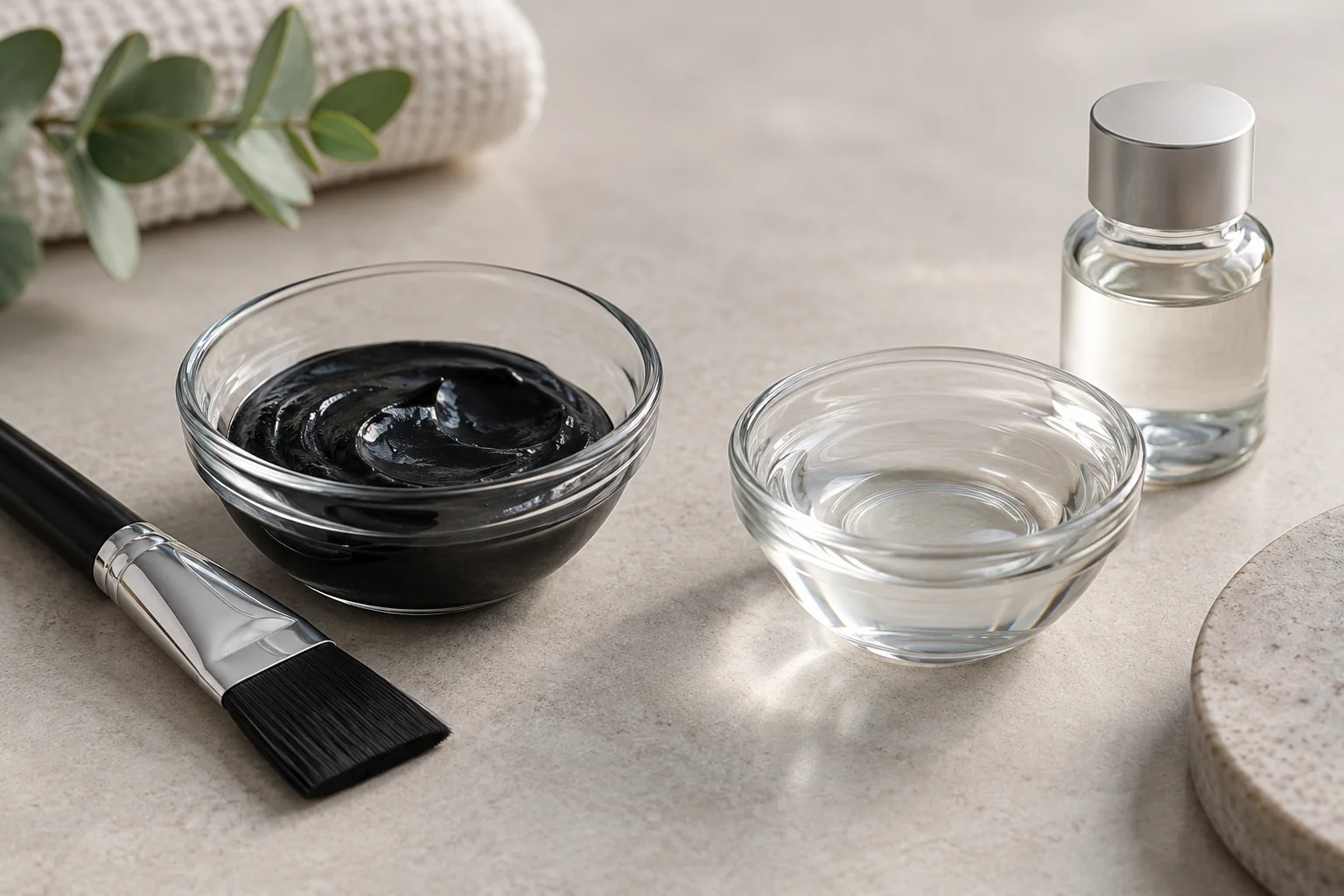
AI-generated illustration created for this article. This still life evokes the two approaches without depicting an actual protocol, commercial product, patient, the SGL practice or a treatment result.
Initial consultation
Dedicated time to understand your needs, check the indication and define the most suitable plan.